

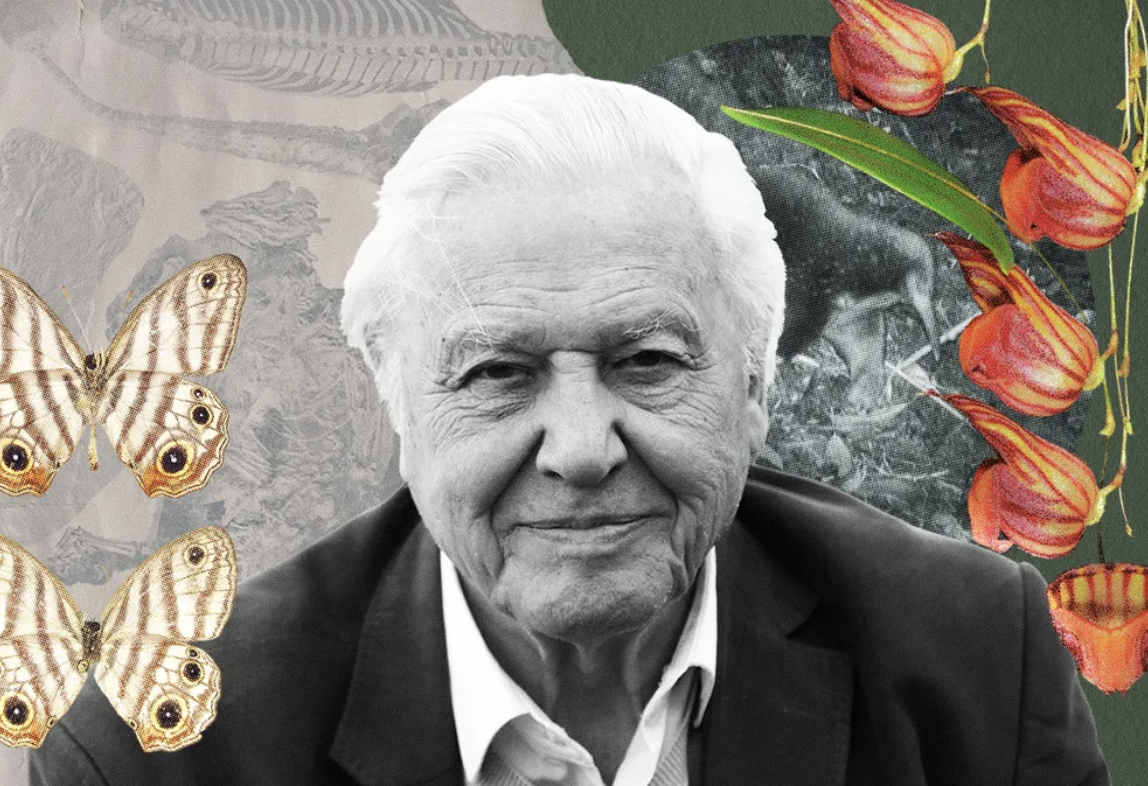
For many people, the voice of nature sounds like David Attenborough. It meanders through scenes of oceans, rainforests, deserts, and glaciers with a calmness that feels almost surreal in a world full of constant noise. Generations have grown up hearing him narrate the movements of birds, the migration of whales, or the lives of animals hidden deep within forests most people will never see for themselves. Now, as David Attenborough turns 100, his career represents a century of changing how humans understand the planet they live on.
Attenborough first became known through his work with the BBC, where he helped create nature documentaries that brought distant parts of the world into people's homes, showing audiences environments they may never have imagined seeing. Long before social media or instant access to information, these programs transformed nature from something scientific and out of reach into something personal; animals became living creatures with struggles and relationships that audiences could connect with, rather than just pictures in textbooks.
Part of what made Attenborough so influential was his ability to make nature feel important without overwhelming viewers. His narration rarely relied on dramatic language or exaggerated action. Instead, his documentaries focused on the observation and patience often needed to notice the layered beauty of the natural world.
Over time, however, Attenborough’s message changed. Earlier documentaries focused mostly on the exploration of pristine, untouched landscapes. They celebrated the diversity of life on Earth and the excitement of learning about unfamiliar ecosystems. But as environmental problems became harder to ignore, the tone of his work changed. Climate change, pollution, habitat destruction, and extinction became central topics in many of his later films, especially in his Our Planet series.
This evolution is part of why Attenborough’s career matters so much. His work mirrors the drastically changing relationship between humans and the environment over the last century. Born in 1926, he witnessed enormous technological and industrial growth alongside increasing environmental damage. Through his documentaries, audiences could see these changes happening as melting ice caps, dying coral reefs, and disappearing species became visible to the general public.
Attenborough became one of the most trusted public figures in environmental media and continues to be so in the digital age. While modern entertainment is now designed for shorter attention spans, millions of people still watch long-form nature documentaries narrated by a man whose style has remained unchanged for decades.
At 100 years old, David Attenborough’s legacy goes beyond television. He has shaped how people see the natural world and humanity’s responsibility towards it. For generations, he invited audiences to look more closely at life on Earth, prompting them to understand what can be admired but also so easily lost.