Spotify is the world's largest music streaming platform, with over 600 million users and around 200 million paying subscribers. The app features music from world-renowned artists such as Shakira, Taylor Swift, and Ariana Grande, who is currently the most listened-to singer on the platform, with 126 million monthly listeners.
Spotify operates using the “Freemium” business model, where users who do not pay for a subscription receive frequent ads and have limited skips. To remove ads and unlock full features, users must pays $11.99 per month for a basic individual plan. Certain plans, such as the student premium, cost only $5.99 a month. Spotify uses these subscription fees and advertising revenue to operate the app, pay investors, and compensate artists.
However, the platform includes far more than just major stars. Spotify also features many smaller artists who may have only a thousand monthly listeners or fewer. These artists account for 80% of the 12 million artists on Spotify. In fact, 78.4% of all Spotify artists in 2022 had under 50 monthly listeners. Without these smaller artists, Spotify would have a much smaller pool of music and could potentially lose many listeners.
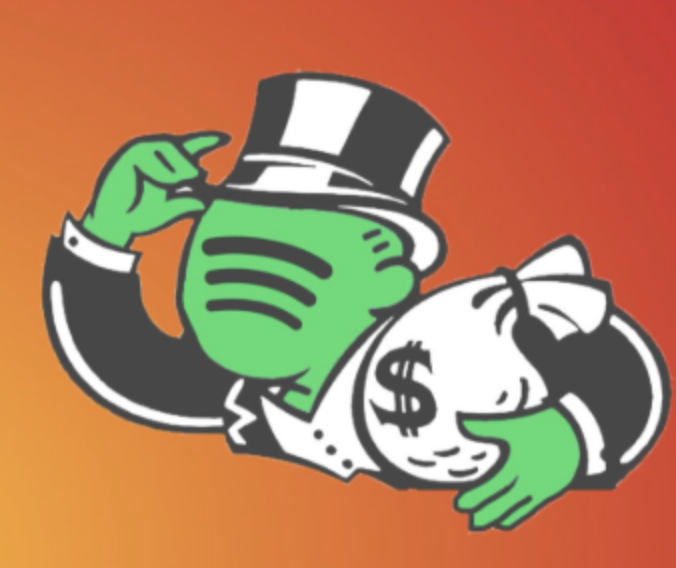
Artists who have the highest number of listeners receive the most from the app. For example, Ariana Grande, who has the most monthly listeners, has reportedly earned hundreds of millions over her career from streaming and related revenue. However, smaller artists, who make up the vast majority on the platform, often receive as little as pennies to a few dollars a month. With earnings set between $0.003 to $0.0005 per stream, artists with fewer than 50 monthly listeners will earn at most 25 cents a month.
Despite the near non-existent pay Spotify offers, small artists almost always have to upload their music onto the platform because of its ubiquitous presence in the music industry. This creates a harmful cycle in which numerous artists are paid paltry amounts while simultaneously laying the foundation for Spotify’s success and immense popularity.
Many individuals have called out Spotify for its treatment of smaller artists. There are currently, there are two lawsuits and controversies involving the platform. The first concerns how certain artists, such as Kendrick Lamar and rapper RBX, were accused by Drake of using bots or fake automated accounts to generate billions of fake streams and thus, revenue. This affects smaller artists because of Spotify’s “streamshare” payment method, meaning artists are paid in proportion to total streams. If streams are artificially increased, revenue becomes more concentrated among already dominant artists. This can also influence and distort algorithms, causing Spotify to push listeners toward already popular songs. The app further harms smaller artists, with many reporting their music being ‘nuked’ or removed entirely, because it was added to a flagged or suspicious playlist outside of the artist's control.
The second lawsuit claims that Spotify recommends the highest-paying labels and artists through Discovery Mode. Critics argue that Spotify prioritizes these larger labels because they allow the app to keep a 30% cut of royalties earned through these streams, as they can afford to lose royalties in exchange for exposure. However, these are often not the artists who need exposure the most. Instead, Spotify could shift more focus to emerging artists who need a breakthrough to gain popularity.
Despite lawsuits highlighting the financial abuse of small artists, Spotify implemented a new policy in 2024 stating that if a song receives fewer than 1,000 streams, artists cannot claim or receive compensation for that track. This further limits payment for smaller artists, as two-thirds of songs on the platform fall below this threshold. However, the policy also attempts to minimize and flag bots designed to artificially inflate streams. A label is charged around $11 per track per month if 90% or more of a track's streams are found to be fraudulent or artificially generated.
These examples show how Spotify’s current system continues to exploit smaller artists while disproportionately benefiting already powerful labels. If Spotify wants to support the full range of musicians on its platform, it must genuinely offer a space where smaller artists can gain the exposure and financial support they deserve.