

Free soloing is widely regarded as one of the most dangerous and impressive sports in the world, as climbers scale enormous heights without ropes or equipment. Alex Honnold is often considered one of the greatest free soloists of all time, completing a “Triple Solo” of El Capitan, Mt. Watkins, and Half Dome, and gained international fame throughthe Oscar-winning Netflix documentary, Free Solo, which chronicled his 3,000-foot climb of El Capitan.
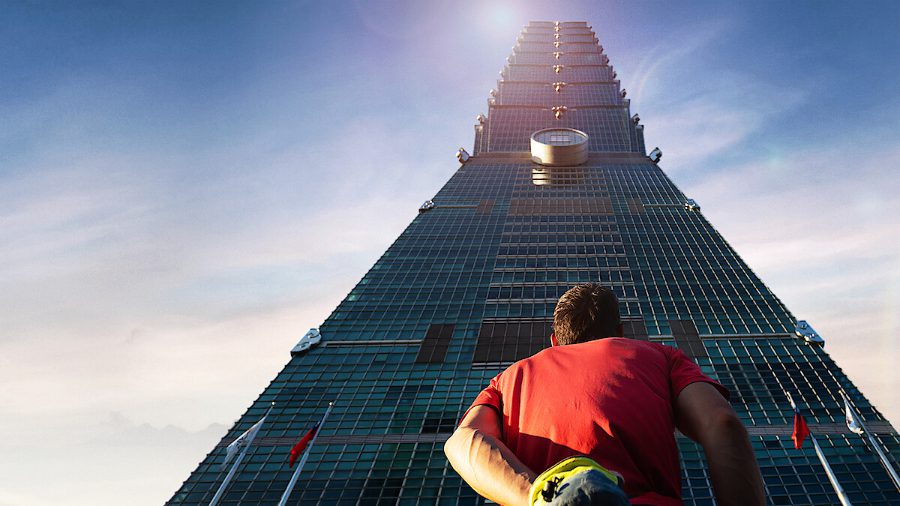
Most recently, on Sunday, January 25th, 2026, the world-renowned soloist climbed the Taipei 101 skyscraper, streamed live on Netflix. The climb itself was approximately 90 minutes long and reached a height of 1,667 feet, setting a world record as the largest and highest urban free solo climb completed in history.
Throughout the two-hour live-streamed climb, Honnold faced several significant challenges. One of the most demanding sections involved a series of overhanging architectural boxes angled outward by roughly 10 to 15 degrees. This forced him to climb away from the building, placing sustained strain on his arms and core as he climbed hundreds of feet. Not only is this challenging in itself, but it is also something vastly different from the terrain Honnold typically climbs, which is constantly vertical or overhanging.
Another challenge came in the form of a set of slick, flat, and tall decorative dragons. To navigate around ten large dragons, Honnold gripped their sides, jumped between holds, and pivoted around their surfaces – leaving little margin for error. Another key challenge Honnold faced was the sleekness of the building. Taipei 101 is constructed primarily of glass and smooth, thin metal panels that stick out, making gripping the building much harder than rocks, which are Honnold’s specialty.
Beyond the struggle of scaling the building itself, Honnold also faced the pressure of climbing live in front of millions of people. While the attention was stressful at first, Honnold later stated that he found it encouraging to have so many people rooting for him and excited to see him succeed.
Despite the event’s scale, which attracted millions of live viewers, he was compensated relatively little in comparison to other professional athletes. Estimates suggest he earned around $500,000, which Alex described as “an embarrassingly small amount” in the context of professional athletics and the risk involved. It remains unclear whether Netflix compensated him separately for training. Still, Honnold stated that he would have done the climb without pay, describing it as a lifelong dream of his.
Alex Honnold’s record-setting climb may represent the start of an era for the sport: urban free soloing. Throughout his climb, Honnold demonstrated his ability to shift from traditional rock climbs to modern scaling, highlighting his raw talent and sheer determination, regardless of the paycheck. Ultimately, Alex Honnold’s latest achievement continues to defy what was deemed physically impossible, contributes to the evolution of free soloing, and reinforces his role as one of the defining figures of the sport.
.