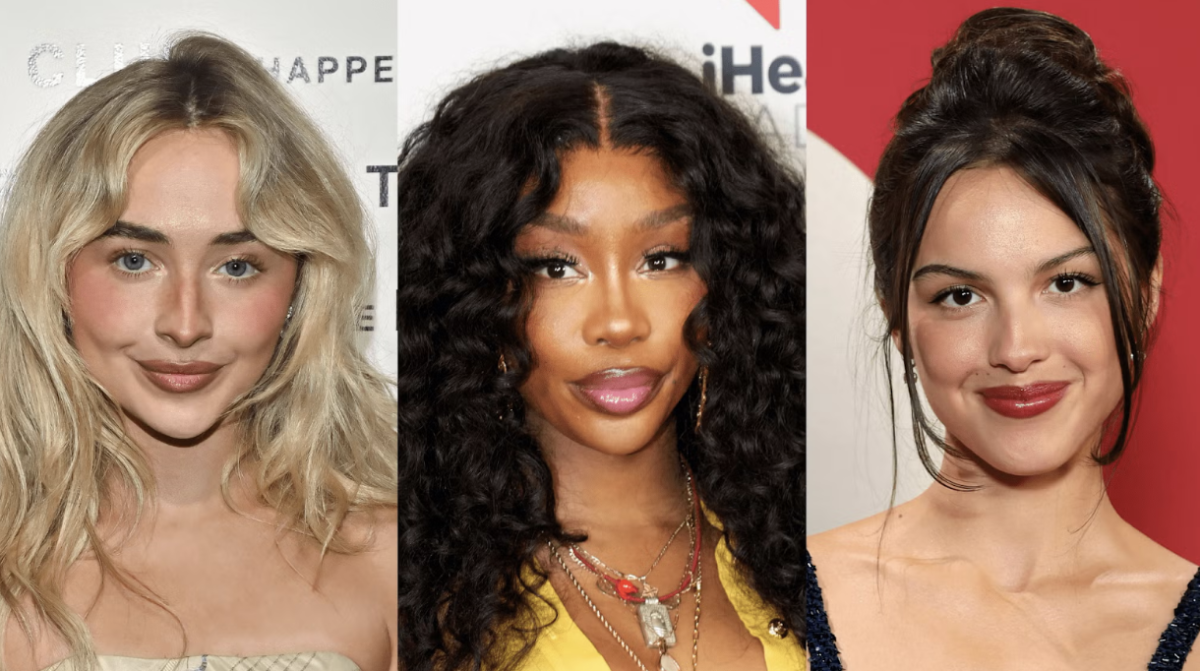
The White House has found itself in yet another scandal, as various female artists are unhappy with the continuous, unauthorized use of their music. While many continue to speak out against the White House, the issue persists.
On Wednesday, November 5th, 2025, the White House/Trump Administration used Filipino-American singer Olivia Rodrigo’s song, “All-American B*tch,” over a video showing deportations with the caption, “If ICE finds you.” Rodrigo responded on Instagram, stating, “Don’t ever use my songs to promote your racist, hateful propaganda.”The White House later replied, “America is grateful all the time for our federal law enforcement officers who keep us safe. We suggest Ms. Rodrigo thank them for their service, not belittle their sacrifice.”
This is not an isolated incident. In the past, the administration has repeatedly used music by a considerable number of female artists' without permission, overlaying the songs with controversial content, often related to ICE and immigration. When artists speak out, they are frequently met with similarly belittling or dismissive responses.
Other artists, such as SZA, have been similarly affected by the issue. On December 9th, 2025, the unreleased song “Big Boys,” first performed on Saturday Night Live in 2022, was overlaid over a montage of ICE officers making arrests. The video was captioned, "WE HEARD IT'S CUFFING SZN.” Bad news for criminal illegal aliens. Great news for America," referencing one of the lyrics from the well-known song. Currently, the post has 29.5K likes and 2.2K replies. SZA responded the following day on X writing, “White House rage baiting artists for free promo is PEAK DARK ..inhumanity + shock and awe tactics … Evil n Boring.” Her post quickly gained traction, reaching 117.6K likes – surpassing the original White House post.
Additionally, well-known pop artist Sabrina Carpenter's song “Juno” was featured in a video depicting the arrest of several immigrants. During her tour, Sabrina Carpenter would playfully arrest attendees at the concert with a pair of pink fluffy handcuffs. The White House appropriated this concept, pairing the lyric “have you ever tried this one,” with footage of real arrests. Carpenter responding on X, writing, “This video is evil and disgusting. Do not involve me or my music to benefit your inhumane agenda.” White House spokesperson, Abigail Johnson, responded saying, “Here’s a Short n’ Sweet message for Sabrina Carpenter: we won’t apologize for deporting dangerous criminals, illegal murderers, rapists, and pedophiles from our country. Anyone who would defend these sick monsters must be stupid, or is it slow?”
These are a few of many examples of the White House using female pop artists’ music without consent. Although these are only a fraction of the broader pattern, there seems to be a recurring theme of hostility in the White House’s responses when challenged. These incidents raise larger concerns about consent, artistic control, and power in the digital age. Ultimately, the controversy prompts a broader question: who truly holds power over cultural production and its meaning—the artists who create it, or the institutions that repurpose it? prompts a broader question: who truly holds power over cultural production and its meaning—the artists who create it, or the institutions that repurpose it?