

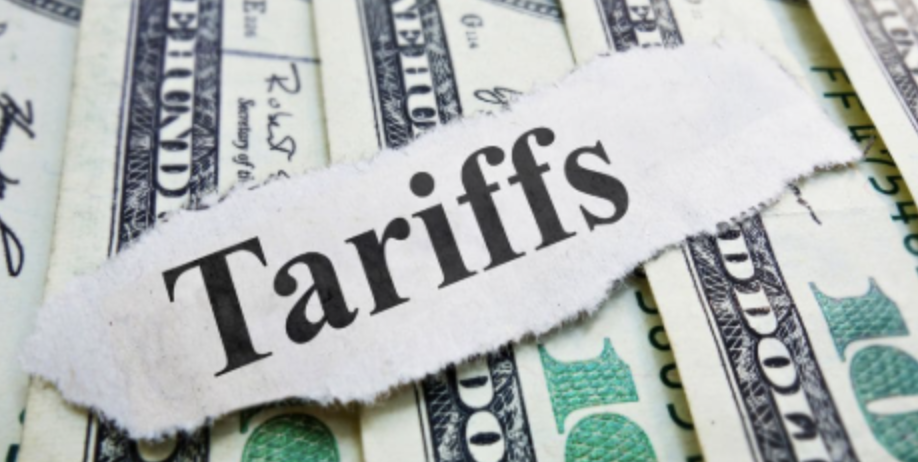
In a 6-3 ruling on February 20th, 2026, the US Supreme Court deemed Trump's infamous tariffs unlawful, striking down one of the most controversial economic policies of his second term. The court’s ruling was centered around the Executive Branch’s use of the International Emergency Economic Powers Act (IEEPA), which allows the president to control aspects of international economic relations, such as tariffs, during a national emergency.
On January 20th, 2025, the first day of President Trump’s second presidential term, he imposed a 10% tariff on all imports. To justify this action, Trump cited the illicit fentanyl crisis and flow of migrants as a threat to national security, arguing that these issues allowed him to use the IEEPA. Despite the president’s claims, however, the Supreme Court ultimately found that his reasoning was insufficient to put the act into use – especially because the act is solely meant to be used if and when the US is in a state of emergency – yet Trump frequently openly stated various other motives and reasons for the tariffs.
One of Trump’s primary goals in implementing tariffs was to bring factory and manufacturing jobs back to the United States. However, this overlooked the reality that the cost of labor in America is significantly higher than in other countries such as China, Thailand, and India. As a result, tariffs heightened the cost of businesses’ imported commodities, and much of this additional cost was placed on consumers. Another critical reason that Trump imposed tariffs was to use them as a political bargaining tool in international affairs. For example, during discussions surrounding the so-called “Board of Peace,” he threatened to place a 200% tariff on champagne, one of France’s most iconic exports. In addition, Trump argued that implementing tariffs would reduce national debt by generating billions of dollars in government revenue from foreign exports.
While Trump attempted to get as much money as he could from his illegal taxes, he now must repay billions of dollars to US importers and customs brokers who paid under the policy. Trump will have to pay approximately 166 to 175 billion dollars in repayments, much of which has not been paid yet. As a result, taxpayer money may ultimately be used to reimburse importers, shifting the burden back onto the American public.
In response, more than a thousand international import companies, such as Costco, FedEx, and Prada, are suing the US government, seeking compensation for the money paid under the tariffs. However, under the IEEPA, the government reportedly collected only 134 billion dollars. This further increases concerns about the growing federal deficit and the long-term economic effects of the policy.
Following the February 20th ruling, Trump attempted to reinstate his tariffs through Section 122 of the Trade Act of 1974, which allows the president to temporarily place tariffs on countries that violate trade agreements and act unfairly. Under this authority, a new round of tariffs established a baseline 10% tariff on imports from nearly every country.
The decision also highlights the broader consequences of economic policies driven by political ambition rather than long-term public benefit. In the end, the controversy surrounding the tariffs demonstrated how policies intended to strengthen the American economy can instead create financial instability, increase costs for consumers, and place additional burdens on taxpayers.