

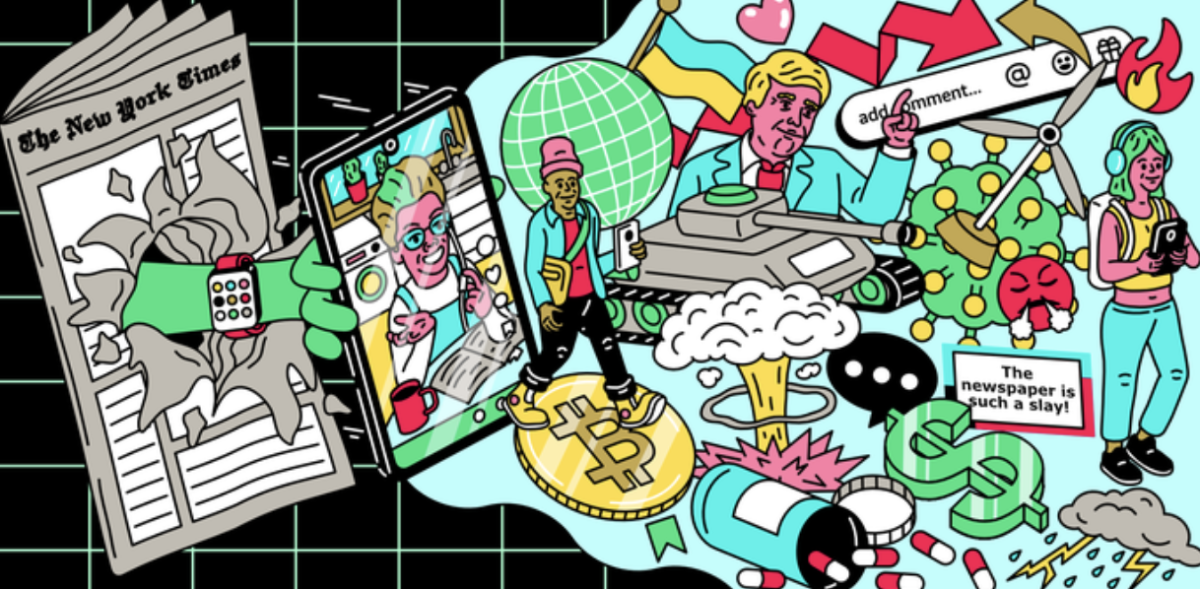
Over the past decade, TikTok has risen to become one of the top social media platforms where Gen Z receives their news, overtaking platforms such as YouTube and Instagram for the first time in 2025.
Gen Z users favor the TikTok algorithm’s For You Page, which delivers personalized, short-form news videos that feel more immediate and relatable than traditional news anchors such as CNN and ABC News. Young TikTok users have shown heavy interest in creators who blend breaking news with humor, commentary, and drama, turning complex events into short and memorable stories. In comparison, traditional media can often seem too formal and slow-paced, while TikTok blends news with entertainment, keeping its young users hooked. However, as TikTok grows into a major news source, questions remain about how reliable its news really is.
TikTok’s short videos and engaging algorithm spread misinformation quickly, oversimplifying complex issues into short, drama-packed videos. Gen Z users frequently skip fact-checking and rely on videos posted by popular creators to include the whole truth, while focusing on fascinating rumors and comments that expand on the video, amplifying the spread of misinformation. This has become increasingly concerning as more young users begin to trust social media news as much as national outlets. Supporting these concerns, a fact-c›hecking investigation conducted by NewsGuard analyzed 540 videos that appeared in TikTok search results for major news topics and found that one in five contained misinformation and false claims. Many of these misleading videos gained millions of views before being removed. In addition, recent Pew Research studies have found that over half of Gen Z surveyed reported relying on TikTok for daily news updates.
The very features that make TikTok engaging also make it risky. The platform’s algorithm personalizes content for each specific user based on their interests, meaning that the news the user comes across is often tailored to what they are most likely to believe or engage with. As a result, videos discussing simplified news of political conflicts, climate issues, and celebrity scandals are frequently presented through dramatic storytelling rather than balanced reporting. Users who were repeatedly matched to these videos based on proven interest observed by the algorithm fill the comment section with debate, where more speculation spreads rather than corrections.
When asked why they continue to rely on TikTok for news despite these concerns, many Gen Z TikTok users admitted they trust familiar creators more than large media corporations. Influencers are often seen as relatable individuals rather than large institutions that may have political or corporate agendas. For many, the difference between influencers and journalists has become increasingly blurred.
Regardless, not all reactions to TikTok news have been negative. Some see opportunity in this trend – a 2025 article by Deseret News explained that using TikTok for news is an exciting way to engage younger audiences. Established news outlets have also built successful TikTok followings by adapting their reporting style to fit the platform’s fast-paced and entertainment-driven format. Ultimately, TikTok's rise as a news source reflects its ability to make news feel alive, immediate, and personal. With every swipe offering a new perspective, controversy, or conspiracy, the platform may continue redefining how future generations consume and understand the news.